01 · The challenge
Tracking symptoms is only part of the story.
For people living with eczema, daily management can involve much more than physical symptoms. There is the effort of tracking possible triggers, the challenge of describing changing symptoms at appointments, and the emotional weight of feeling misunderstood.
CURA explored how a digital experience might bring these pieces together: making patterns easier to see, supporting conversations with clinicians, and creating space for connection.
How might we help people with eczema make sense of their daily experience and have better conversations about their care?
02 · Research & insights
Look beyond the tracking feature.
Our research combined digital ethnography, competitive analysis, expert input, and heuristic evaluation. We reviewed online accounts of living with eczema, explored existing tools, and used a dermatologist’s feedback and subject matter expert input to inform the concept.
A research-based persona and current-state journey helped us connect recurring problems across daily life and clinical appointments.
Scattered tracking
Manual records can take effort without making patterns or possible triggers easy to identify.
A communication gap
Changing symptoms are difficult to summarize in the limited time available at an appointment.
An isolating experience
People may struggle to find others who understand the everyday impact of eczema.
03 · The concept
Three connected moments of support.
The proposed experience focused on turning daily information into something people could understand, discuss, and act on with their care team.
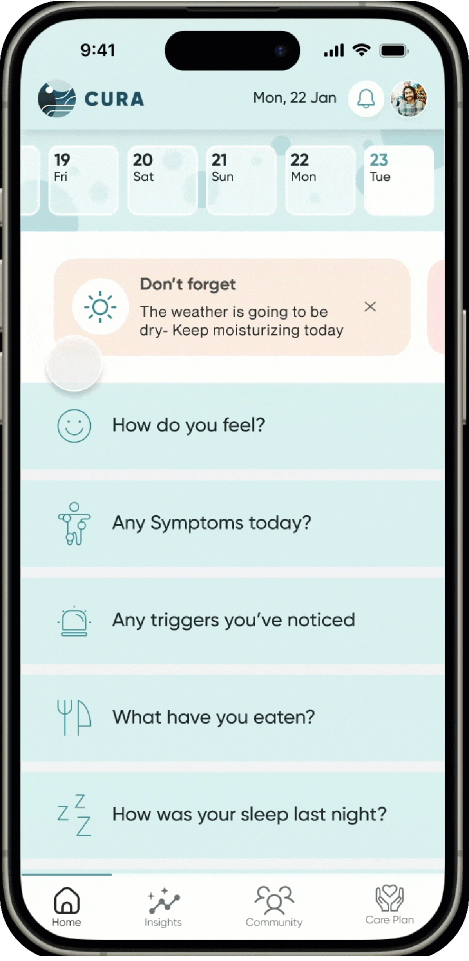
01 · Notice
Bring daily tracking together.
One place to record symptoms, possible triggers, routines, and other health factors, reducing the need for scattered spreadsheets and notes.
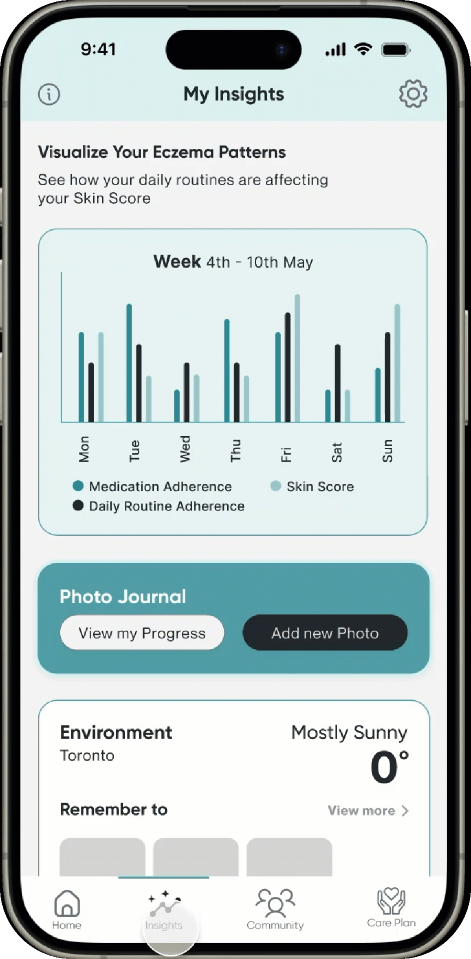
02 · Make sense
Prepare for better conversations.
The concept brings tracked information into visual summaries and shareable reports, helping someone explain changes in their experience to a healthcare professional.
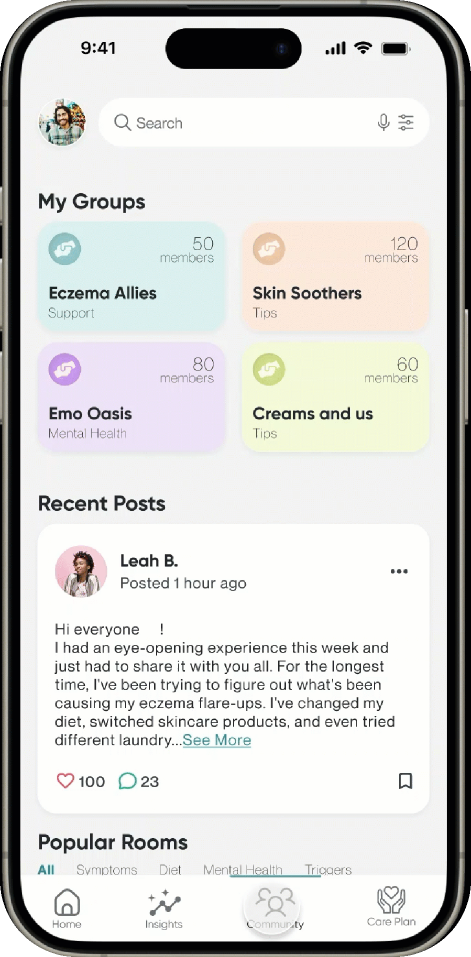
03 · Connect
Make room for shared experience.
Topic-based conversations offer a place to share experiences and find peer support, with a clear distinction between community discussion and medical advice.
04 · Design iterations
Make each interaction easier to understand.
Expert feedback and heuristic evaluation guided successive iterations. We explored photo journaling, clearer onboarding, and simpler ways to indicate symptom severity and location.
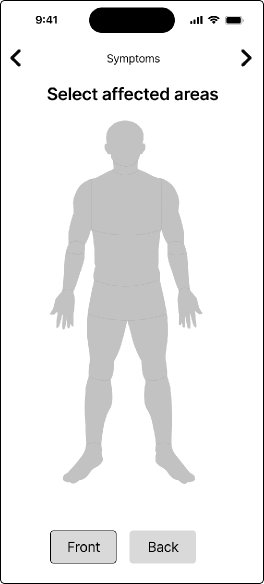
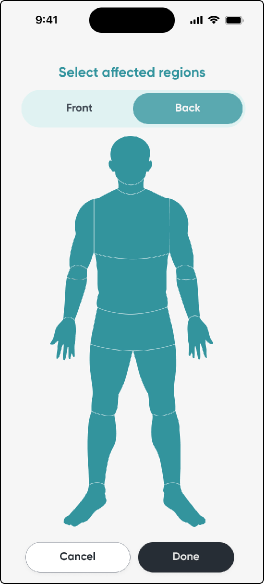
Moving front/back controls into tabs separated the view selection from the actions. Clearer “Cancel” and “Done” labels made it easier to understand how to finish the step.
We also explored a numerical severity scale in place of a more complex slider, and added onboarding progress indicators and screen titles to make the journey easier to follow.
05 · Limits & next steps
Be honest about what the research can tell us.
Online accounts helped surface experiences and questions, but they could not represent everyone living with eczema. Expert input was limited, and heuristic evaluation could not replace direct testing or a fuller accessibility assessment.
CURA remained a concept. We did not test the prototype with our intended patient group. The proposed features and interactions would need further research and clinical input before implementation.
The next steps were to seek ethics approval for direct research, involve people living with eczema in prototype testing, bring in more healthcare expertise, and iterate on the evidence gathered.
06 · What I learned
Clarity is practical. Feeling understood matters, too.
Working in a competition setting sharpened my priorities and taught me to stay open to changing the design. The research also reminded me that a useful health experience needs to acknowledge the emotional realities behind a task.
CURA was runner-up in the 2024 Student mHealth App Competition, organized by the Human Factors & Ergonomics Society.
The opportunity was to help someone feel more informed, more prepared, and less alone.